LATEST NEWS
Catch up with our latest news.
Why Community Participation Should Begin Before Infrastructure Design
Consider a stormwater upgrade whose design is nearly complete when residents explain that the proposed route would disrupt a footpath children use to walk to school. They also identify a flood point that becomes hazardous during summer storms.
This illustrative scenario shows why community participation in infrastructure projects in South Africa should begin while the brief and options are still taking shape. Local knowledge can reveal questions that deserve investigation before decisions become harder to change.
In the stormwater example, early input could prompt engineers to investigate the reported flood point, assess pedestrian access and compare route options before finalising the design.
Community knowledge strengthens the engineering brief
Residents can explain seasonal conditions, informal access routes and service patterns. Operators can identify maintenance constraints. People with disabilities, older residents and caregivers may experience infrastructure differently from other users.
Engineers must assess these observations against surveys, technical investigations and design standards. Community knowledge informs that evidence; statutory authorities retain decision-making responsibility. Participation cannot remove safety requirements, budget limits or legal obligations.
Where can communities participate?
The Local Government: Municipal Systems Act 32 of 2000 provides for community participation in preparing, implementing and reviewing municipal Integrated Development Plans (IDPs). Section 29 requires consultation on development needs and priorities during IDP drafting. CoGTA’s IDP material similarly describes integrated planning as a joint exercise involving stakeholders and affected departments. [1,2]
Recognised opportunities include advertised IDP meetings, ward structures, public meetings and written submissions. Ask the municipality’s IDP office or ward councillor about its programme, documents and submission deadlines. [1]
IDP participation helps shape municipal priorities. Individual infrastructure projects also need engagement with affected users while the brief and design options are being developed.
Where environmental or mining consultations apply, follow the relevant notices to register interest, attend meetings and submit comments. These processes have their own requirements; participation in one does not automatically count as participation in another. [3]
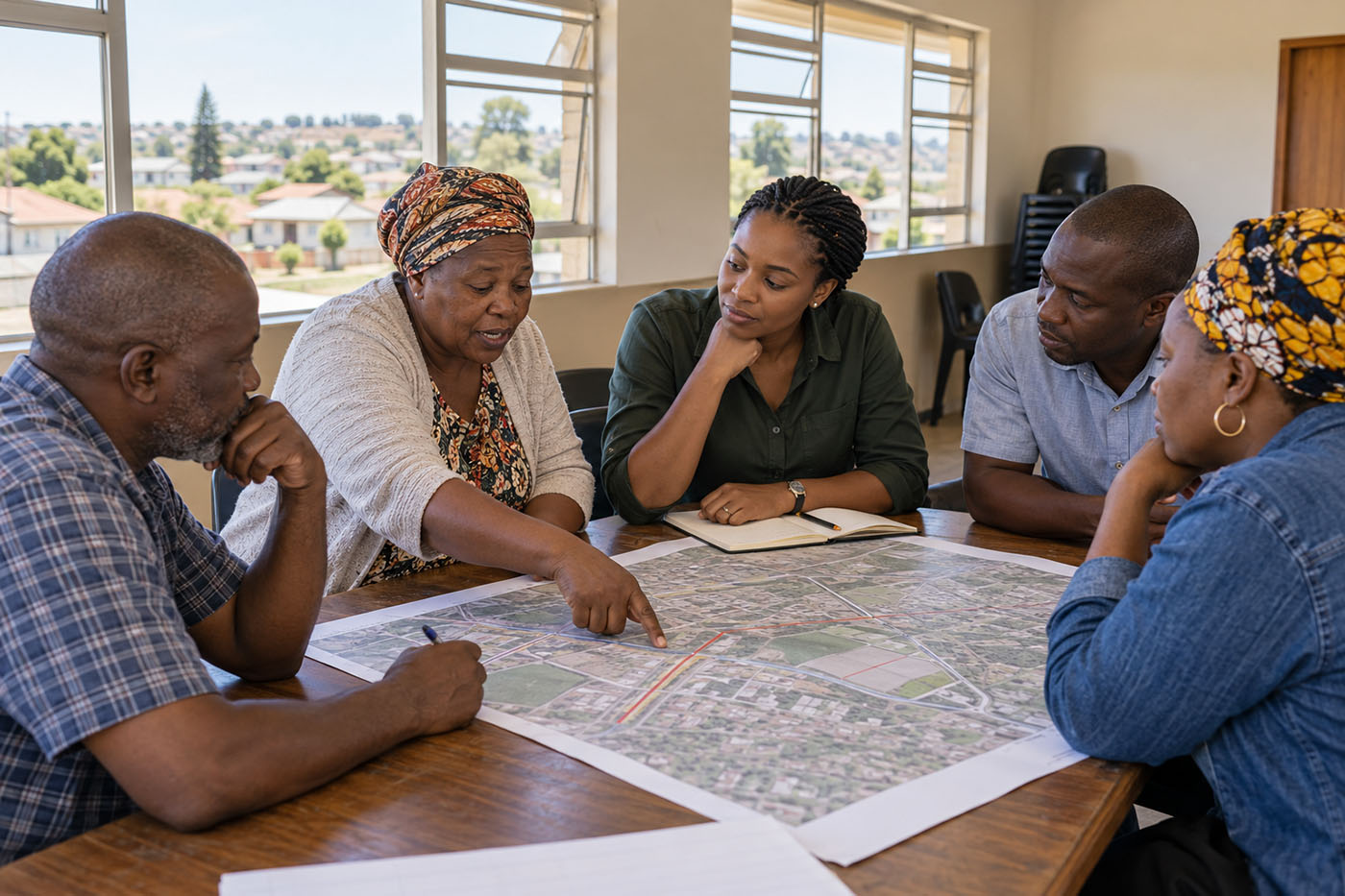
Illustrative AI-generated image of community participation in infrastructure planning.
Make participation useful and inclusive
Start with clear questions about the proposed service and practical alternatives. Explain information in accessible language and provide ways for people who cannot attend meetings to contribute. Include affected users and operators, document input, and explain trade-offs and decisions afterwards. Communities can strengthen submissions with specific locations, dates, photographs and descriptions of how a problem affects daily life. Record differing views rather than assuming one speaker represents everyone.
Plan for life after handover
Early engagement should also address who will operate the asset, fund maintenance and respond to faults. Service interruptions may have different consequences for households, schools, clinics and local businesses.
Community feedback can inform maintenance priorities, while condition assessments, asset registers and operating plans provide the technical basis for managing performance over time. A sense of local ownership can support responsible use, but it does not transfer formal operating duties to residents.
Apply the principle to municipal and mining projects
For municipalities, participation can help connect infrastructure priorities with service needs and available resources. For mine-community infrastructure, the Department of Mineral and Petroleum Resources’ Social and Labour Plan guidance links meaningful consultation to community needs and alignment with IDPs. [3]
Define the purpose and intended users of a proposed facility and confirm a feasible operating and maintenance arrangement. Discuss ownership and responsibilities with the relevant municipality or institution before construction.
Engineering for People at Bolema
Bolema founder Adam Bogatsu is an ECSA-registered civil engineer with municipal infrastructure and strategic-planning experience. As Technical Director on a municipal intervention team, he gained direct experience that challenged his assumptions about service-delivery difficulties and strengthened his commitment to participatory governance.
That perspective connects Bolema’s engineering, environmental review, project-management and asset-management services with the people who use infrastructure.
Planning municipal, mining-related or community infrastructure that must remain useful after handover? Speak to Bolema Consulting about people-centred planning and engineering.
Frequently asked questions
What is community participation in municipal infrastructure planning?
It enables residents and affected groups to inform needs, priorities and service decisions through recognised municipal processes.
How can communities participate in the IDP process?
Check municipal notices, attend advertised meetings and submit comments through the stated channels before deadlines.
Why should engagement happen before infrastructure design begins?
It can reveal access, service and maintenance issues while the brief and design options remain open.
Does public participation guarantee that every community request will be approved?
No. Authorities must weigh input against technical evidence, funding, competing priorities and legal requirements.
How can community input improve mine-community infrastructure projects?
It helps identify relevant needs and operating realities, supporting alignment with municipal plans and sustainable service provision.
**References
1. Local Government Municipal Systems Act 32 of 2000
Sections 16, 17, 28, 29 and 34. Consolidated Act hosted by the Auditor-General of South Africa.
2. CoGTA Integrated Development Planning Information Management System
Northern Cape CoGTA material on integrated stakeholder and departmental planning.
3. Know your Social and Labour Plan
Official departmental information on consultation, community needs and alignment with IDPs, hosted by the Department of Mineral and Petroleum Resources.